“Capturing the Essence”: On Song Dynasty Ceramics and Disciplined Spontaneity
6 August 2026
“Late spring. A scholar sits in his study. After much contemplation he lends his brush the ideal pressure – / leaves his mind there, on the paper.”
Quoted from Sarah Howe, ‘(k) Drawn with a very fine camelhair brush’, Loop of Jade (Chatto & Windus, 2015)
This essay explores the idea of the ‘essence’ in art, specifically through Song dynasty Jun ware ceramics. It considers how the evocation of inner spirit and a meditative atmosphere frames art as a means of expressing fundamental truths beyond surface appearance. Situating this within the traditions of Chinese art, the essay argues that ‘essence’ is not a fixed form but something that emerges through process, material responsiveness and disciplined spontaneity. It then reflects on how these ideas inform my own painting practice.
Jun Ware and the Essence
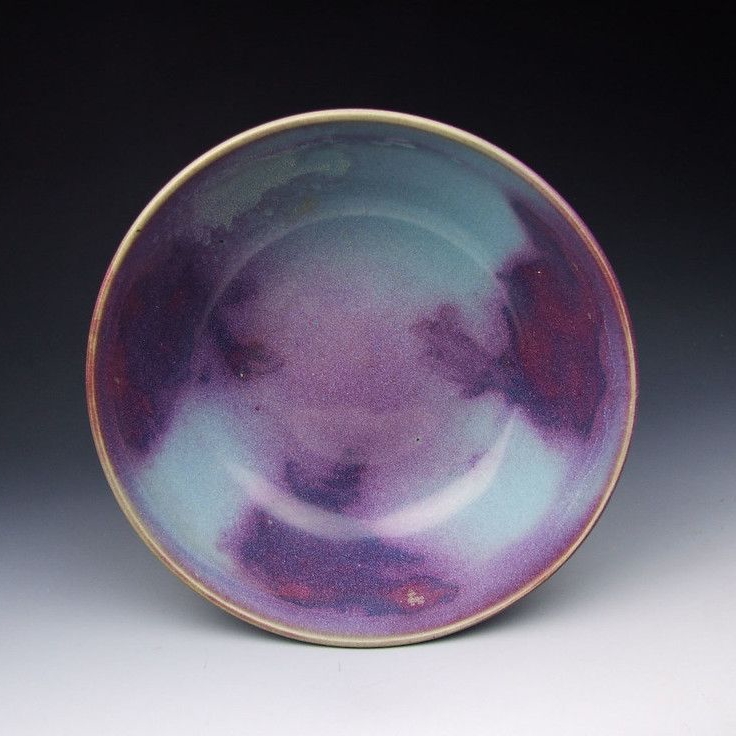
The potter grinds the concoction of copper oxide, feldspar and silica ash into a fine powder. Mixing it with water, the minerals are melded into a thick glaze. He applies multiple coats to the bisque-fired clay, a simple rounded jar now glossy with pools of dull grey and green. He loads the vessels into the kiln, an imposing brick tunnel with an arched roof and blackened exterior, thick with soot from repeated firings. Loaded with pine logs, the furnace is fired to 1300°C.
The flames crackle. Soft pings ring out as the vessels expand and contract. A faint metallic smell emerges. The copper reacts to the changing atmosphere of the kiln as the glaze melts. After over twenty hours of intensely feeding this hungry oven, it is sealed and allowed to cool. Finally, he cradles the pot out from its chamber of metamorphosis. The unpredictable chemistry of earth, air and flame has created luminous splashes and speckles of opalescent blues, hazy violets and mottled purples across its surface. He will assess the new wares before selecting the best for the imperial court, where utilitarian vessels are transformed into objects of reverence.
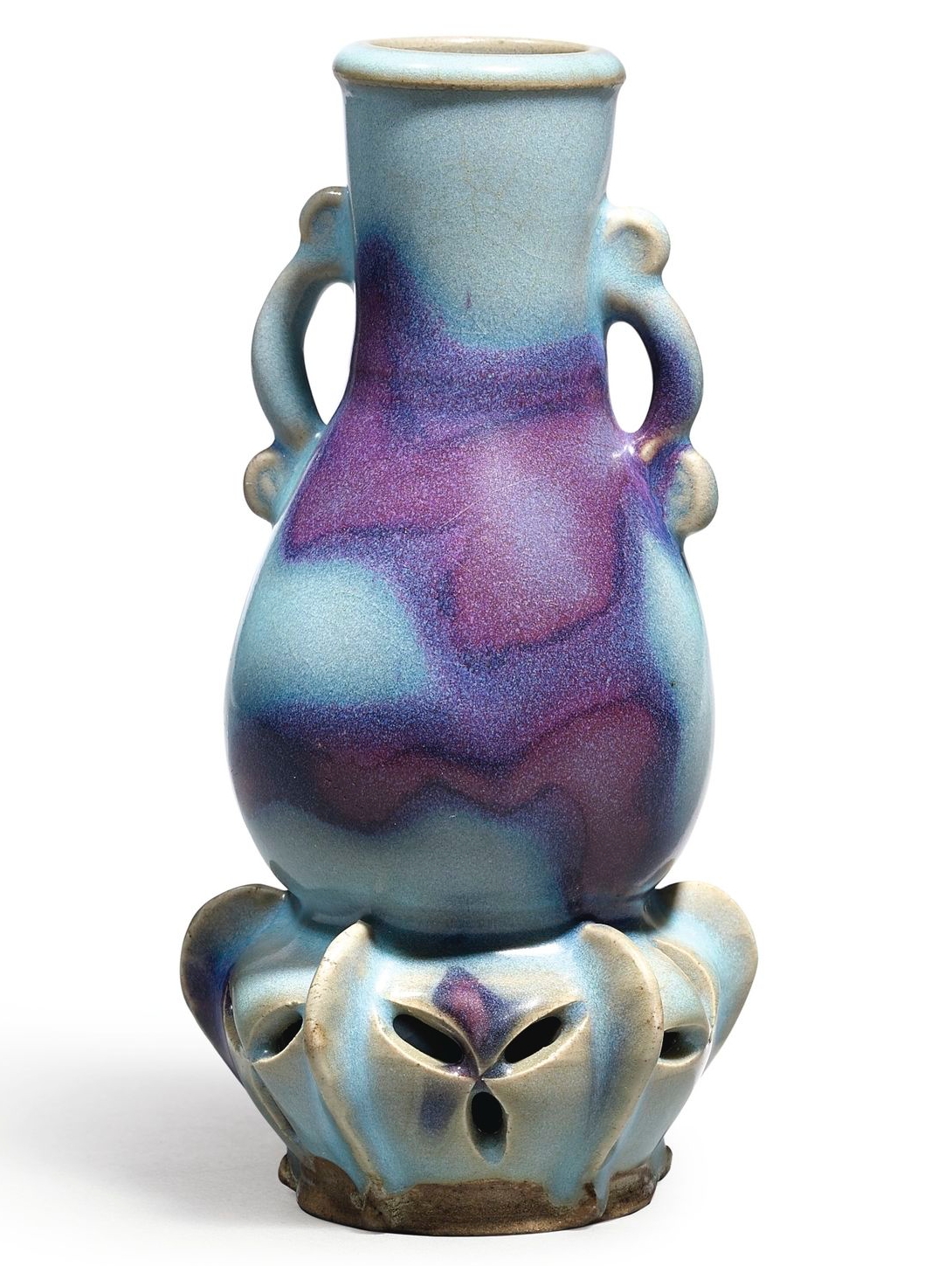
One of the five celebrated wares of the Song dynasty, Jun ware likely originated during the prosperous reign of Emperor Jin Shizong in the 12th century. This distinctive ceramic ware embodies a key principle of Song aesthetics: restraint in form paired with richness in surface and material. Less about intricate decoration, it placed greater emphasis on atmosphere, chance and natural transformation. This reflected a broader cultural shift away from extravagant decoration towards a quiet, restrained, atmospheric beauty, requiring slow looking and contemplation.
This was an aesthetic shift echoed in Chinese ink painting. Rather than striving for exact realism, Chinese painters sought to express the inner spirit of their subjects. Seemingly simple but well-trained brushstrokes were carefully composed to evoke emotions. A few bold, spontaneous strokes suggest a form. An ink painting, for example, might use the ‘one-stroke bamboo’ technique, where a single, fluid brushstroke conveys the vitality of a bamboo stalk. Within this aesthetic structure, empty space plays a fundamental part, creating balance and room for contemplation and the imagination. In Jun Ware, the milky blue glaze often covers a wide expanse, giving breathing room to the intense purple and red splashes.
Fundamentally, this approach involves a high degree of unpredictability. Like any type of ceramic firing, Jun Ware embodies a giving up of control within fixed parameters, something that I’ve called disciplined spontaneity. Disciplined in the sense that the controllable variables are carefully managed. The raw minerals are measured out and recorded, trial and error providing parameters to expectations. Given its distinctive bright colours, with the form of the vessels emphasizing simplicity, the uncontrollable reaction of the glaze in the kiln makes or breaks the vessels (sometimes literally).
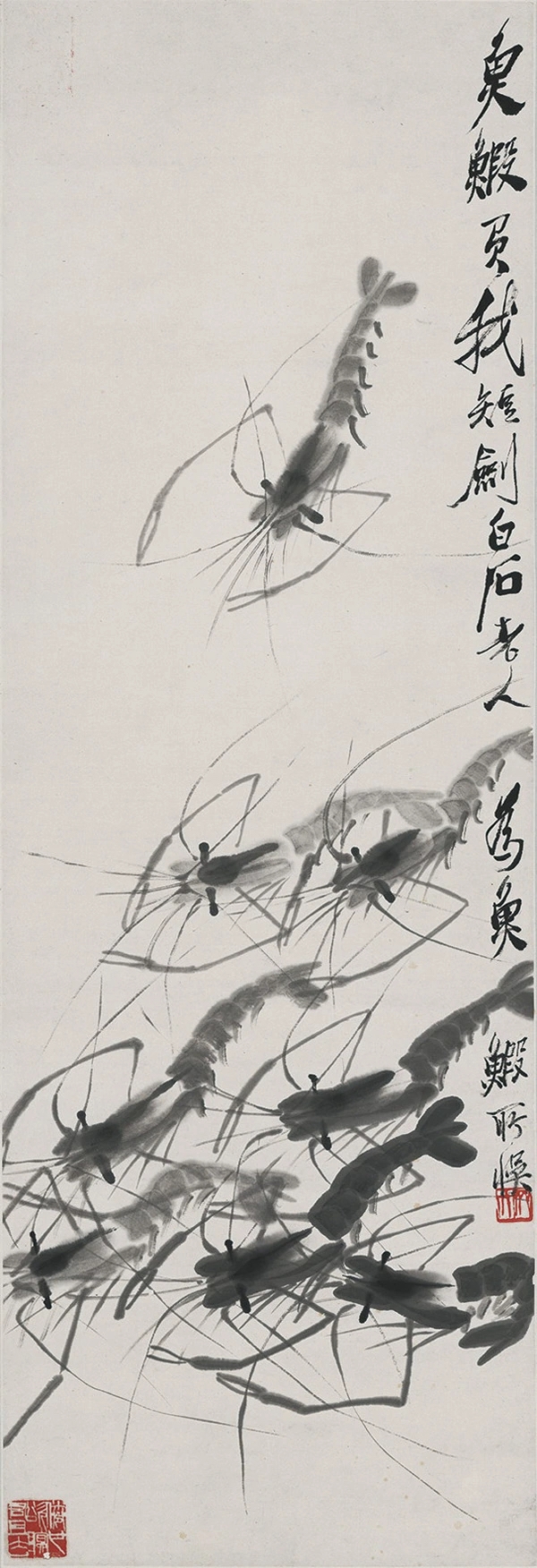
The idea of trying to capture the essence of a subject goes as far back to the 6th century, encapsulated in the idea of qiyun shengdong (气韵生动) or ‘spirit resonance and life movement’ outlined by Xie He in his Six Principles of Painting (c. 550 AD). Rooted in the philosophical traditions of Daoism and Confucianism, qi refers to the energy or life force animating living things whilst yun (韵) means rhythm or harmony. Together, qìyùn suggests that a painting should not just depict an object but convey its inner vitality and soul. For example, the artist Qi Baishi (1864–1957) was famous for his paintings of shrimp. Instead of meticulously rendering each detail, he used a few careful strokes to create a sense of movement, the shrimp seemingly swimming off the paper. Capturing the essence in Chinese art focused less on realism, with a greater interest in expressing a scene’s spirit and atmosphere. It required the maker to deeply understand their subject, then distill it into its most essential and expressive form.
A very brief comparison of Chinese vs Western aesthetics
This tradition of Chinese painting diverges greatly from the Western. Capturing the spirit beyond physical likeness stood in contrast to Western painting’s preference for idealised and classical realism, rooted in the Greek tradition, building up shapes with shading and layering. Where the Western painter attempted illusion by concealing the paint, the Chinese artist focused on brushwork that hid little of the medium. I still remember finding a thick doorstopper about Chinese brush techniques in a local library, with overwhelmingly specific instructions about applying different pressures to different brushes to paint plants and trees. In black ink, they weren't true to life, but effectively expressed movement and texture.
Unsurprisingly, this desire for simplicity and emptiness was disregarded by many Western critics. The German theorist Joachim von Sandrart remarked critically in 1675 that “they [the Chinese] set everything down singly in outline only, without shadows or modelling, but washed over quite simple with colours. They do not know how to set off each figure according to its true quality.” This dismissive view was common among Europeans who travelled to China in the 17th and 18th centuries, casting disapproving eyes over a lack of volume, perspective and shadow.
On the other side of the Silk Road, Chinese artists also critiqued realism. When amateur painters started making works that focused on literal depictions in the Northern Song, they were lambasted as without skill, refinement and understanding by professional court artists. The 11th century artist Su Shi declared that “anyone who judges painting by form-likeness shows merely the insight of a child.”
The desire to capture an essence in a painting, was picked up later in Western art history, from Romanticism - Caspar David Friedrich spoke like a true Chinese scholar when he claimed that “the task of a work of art is to recognize the spirit of nature and, with one’s whole heart and intention, to saturate oneself with it and absorb it and give it back again in the form of a picture” - to Western Impressionism and Abstract Expressionism, the study of which lies beyond the scope of this essay.
More recently, beauty found in ambiguity and mystery is central to Jun'ichirō Tanizaki’s influential In Praise of Shadows (1933). Like Chinese literati painting, Tanizaki sees beauty as emerging from atmosphere, suggestion, and the interaction between the visible and invisible. Warning about the change in aesthetics brought about by the rapid Westernization of Japan, Tanizaki calls for restraint. He highlights how the beauty of lacquerware is enhanced by age and shadow rather than preserved as a flawless object. Ambiguity creates depth and room for contemplation in contrast to the way that electric white lighting exposes everything it touches. The question becomes: does true representation lie in the accurate depiction of external reality, or in capturing the atmosphere, spirit and essence that give a subject its deeper meaning?
This approach reflects broader philosophical traditions - whether Daoist naturalism, Zen simplicity, impressionism or modernist abstraction - that view art as a means of expressing fundamental truths beyond mere appearance. To me, this is the essence of Jun Ware, in its rich colours and atmosphere of quiet contemplation.
Influences in my own practice
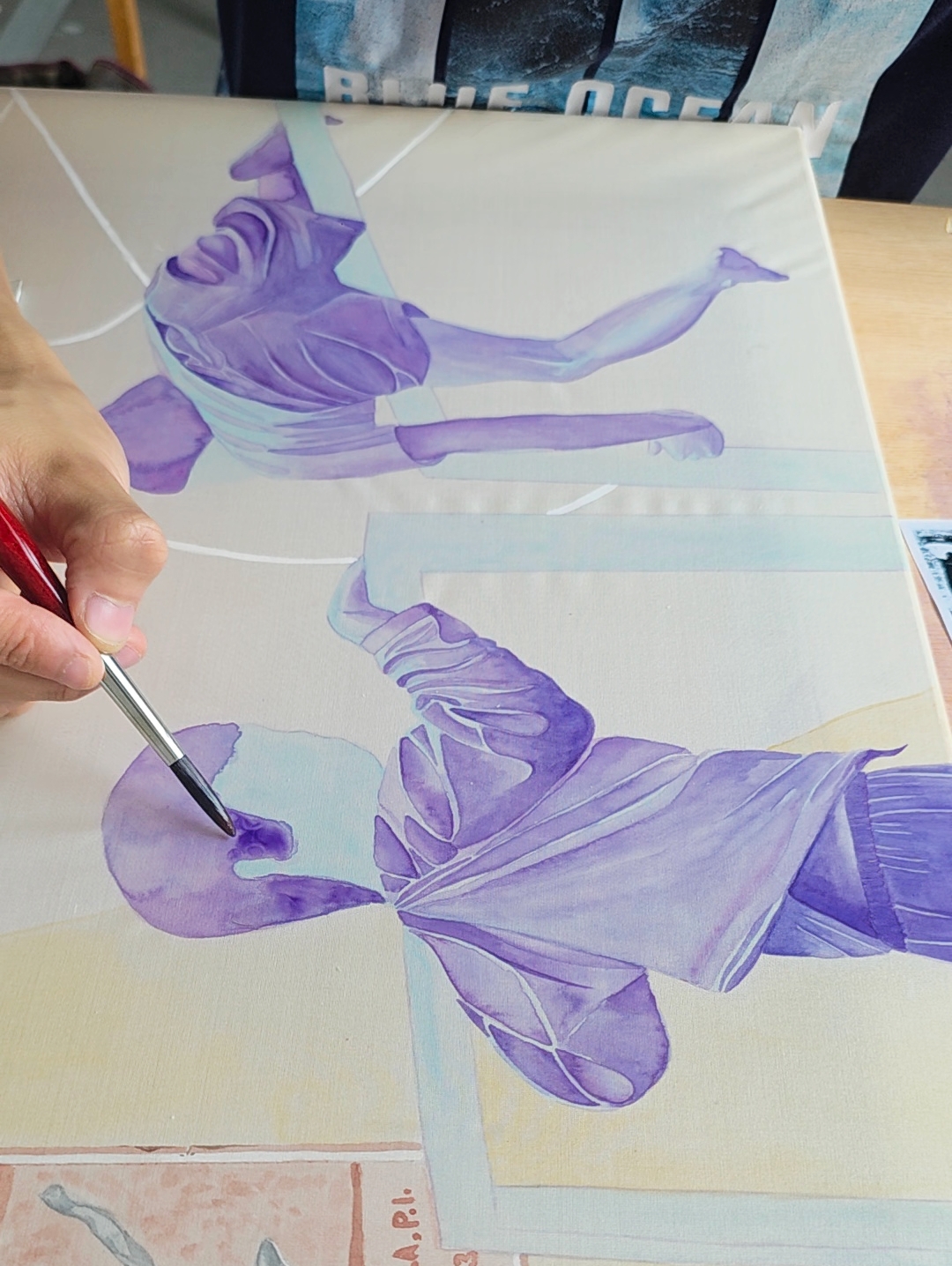
In my own paintings on silk, I attempt to recreate the tranquil quality of Jun ware most directly through my use of colours and in the natural sheen of silk that give the paintings a luminous quality. More recently, I have been exploring the use of empty space, the 留白 liú bái (literally, ‘left white’) valued in Chinese painting and echoed in the expansive areas of colour found in Song ceramics. By allowing these spaces and suggestive traces to remain, I hope to create room for the viewer’s imagination. For me, this is a generous way of making art: rather than providing every detail, it invites the viewer to participate.
Watercolour and inks are well suited to the approach of disciplined spontaneity, being highly fluid mediums that encourage a loss of control. Judgements over when to stop intervening to allow the water and pigments to settle require a letting go of sorts. As a person inclined towards structure, I am always hesitant towards improvisation. Ironically, this has meant that spontaneity is often forced, against the grain of my preferred way of working. Yet by allowing it space to grow in my work, the materials become active rather than passive agents. It means working to understand the material and learning how it reacts. By nature, the process of painting on silk requires a slowness, as the pigments settle into the fabric and change colour. When working looser, this languid process changes, with interruptions and irregular strokes to disrupt the slow settling.
Part of the difficulty with spontaneity in the Chinese tradition is the permanence of the mark. As the Korean artist Do Ho Suh observes, “In Eastern painting, each mark is the equivalent of a breath. The stroke needs to contain life and it can’t be withdrawn. You lay a mark on the paper and that’s it. It requires a very physical level of focus.” The inability to withdraw a mark creates very high stakes, in comparison to painting in oil and acrylic where layers can be quite easily removed or painted over. This vulnerability is precisely what makes the process so compelling. The risk of an imperfect mark allows the work to retain a human presence. In an era increasingly saturated with flawless and often formulaic AI images, these traces of the human hand offer a different kind of beauty, rooted not in perfection, but in attention to process and material.
This essay was written during my time on the 2026 Morphē Arts Residency.
References
Clunas, Craig. Chinese Painting and Its Audiences (Princeton University Press, 2017)
Fong, Wen. Beyond Representation: Chinese Painting and Calligraphy 8th–14th Century (The Metropolitan Museum of Art, 1992)
Hearn, Maxwell K. How to Read Chinese Paintings (Metropolitan Museum of Art, 2008)
Kerr, Rose. Song Dynasty Ceramics (V&A Publishing, 2004)
Tanizaki, Jun'ichirō. In Praise of Shadows (1933)
The Mustard Seed Garden Manual of Painting, originally published 1679-1701 (Princeton, 1992)